
Know who to call
Establish named contacts between faith communities and local law enforcement. Make time for questions about reporting, response and the concerns that affect trust.
The practical aim: a clear contact route.Faith communities + law enforcement
Faith communities need clear contacts, practical safety plans and answers when concerns are raised. Community Safety and Resilience Councils are being developed to work on these priorities with local law enforcement.
Foundation for a Path Forward is developing local councils across Canada. Register your interest in helping shape one.
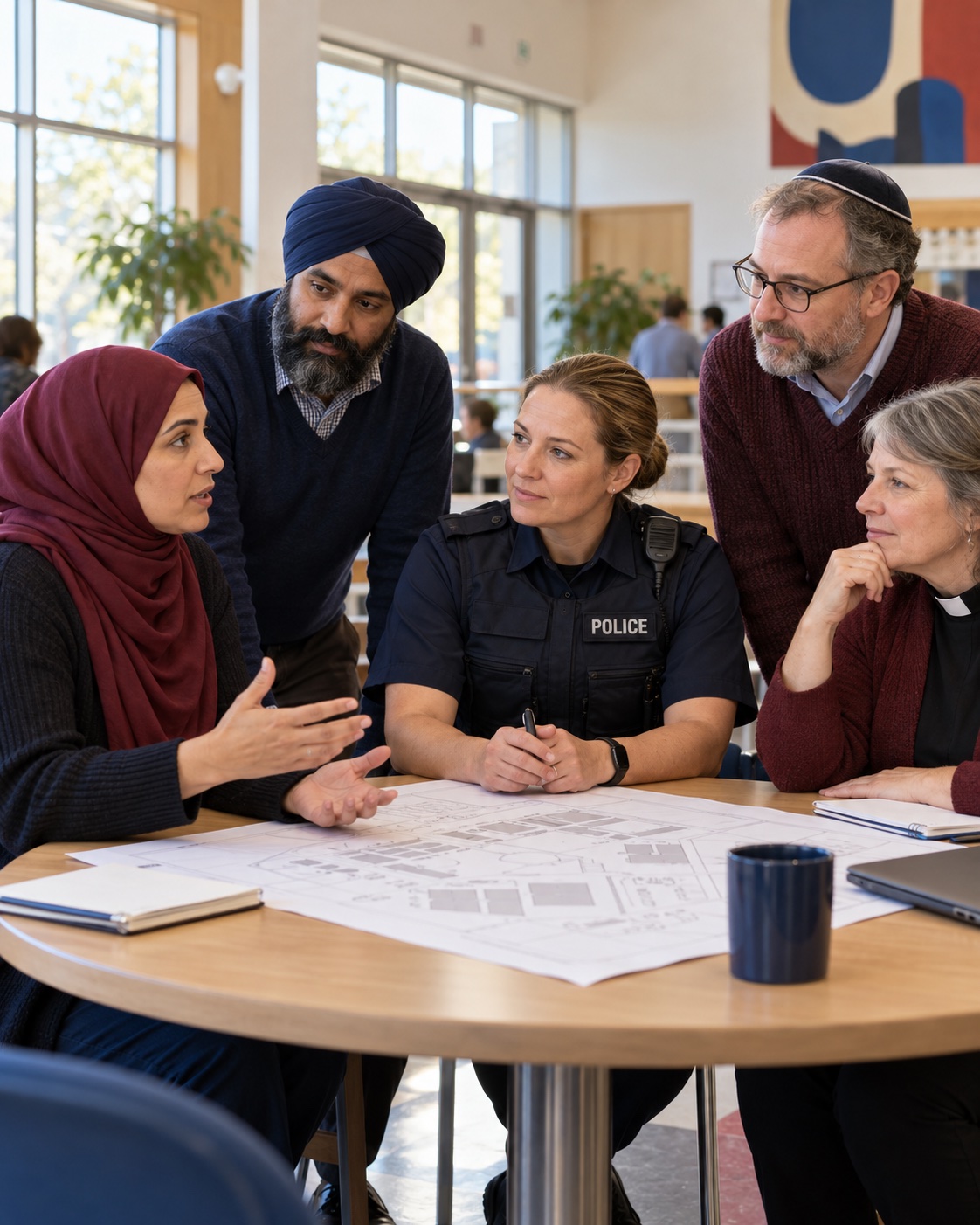
What a local council would work on
A place of worship is also a place where people volunteer, learn, gather and care for one another. Its safety depends on listening to the people who use it and knowing who can help when a concern arises.
Establish named contacts between faith communities and local law enforcement. Make time for questions about reporting, response and the concerns that affect trust.
The practical aim: a clear contact route.Bring community knowledge into planning for services, festivals and public events. Discuss entrances, accessibility, volunteer responsibilities and appropriate safety support.
The practical aim: an agreed local plan.Agree who will take the next step, when they will report back and how the community can raise what remains unresolved.
The practical aim: action people can check.Every faith community belongs in this work
Both need space to listen, ask difficult questions and agree what they can do together. Faith leaders, congregation members, young people, volunteers and police liaison staff can all contribute.
Local experience
Worship and gathering needs
Concerns about safety and trust
A named lead
A clear responsibility
A date to report back
A named liaison
Clear reporting options
Advice within the service’s remit
↳ Bring the result back to the community. Hear what still needs attention.
What cooperation could look like
A council should make the next step easier to understand. Explore these examples of how a faith community and its police liaison could work together.
These are planning examples. Local arrangements and responsibilities would need to be agreed.
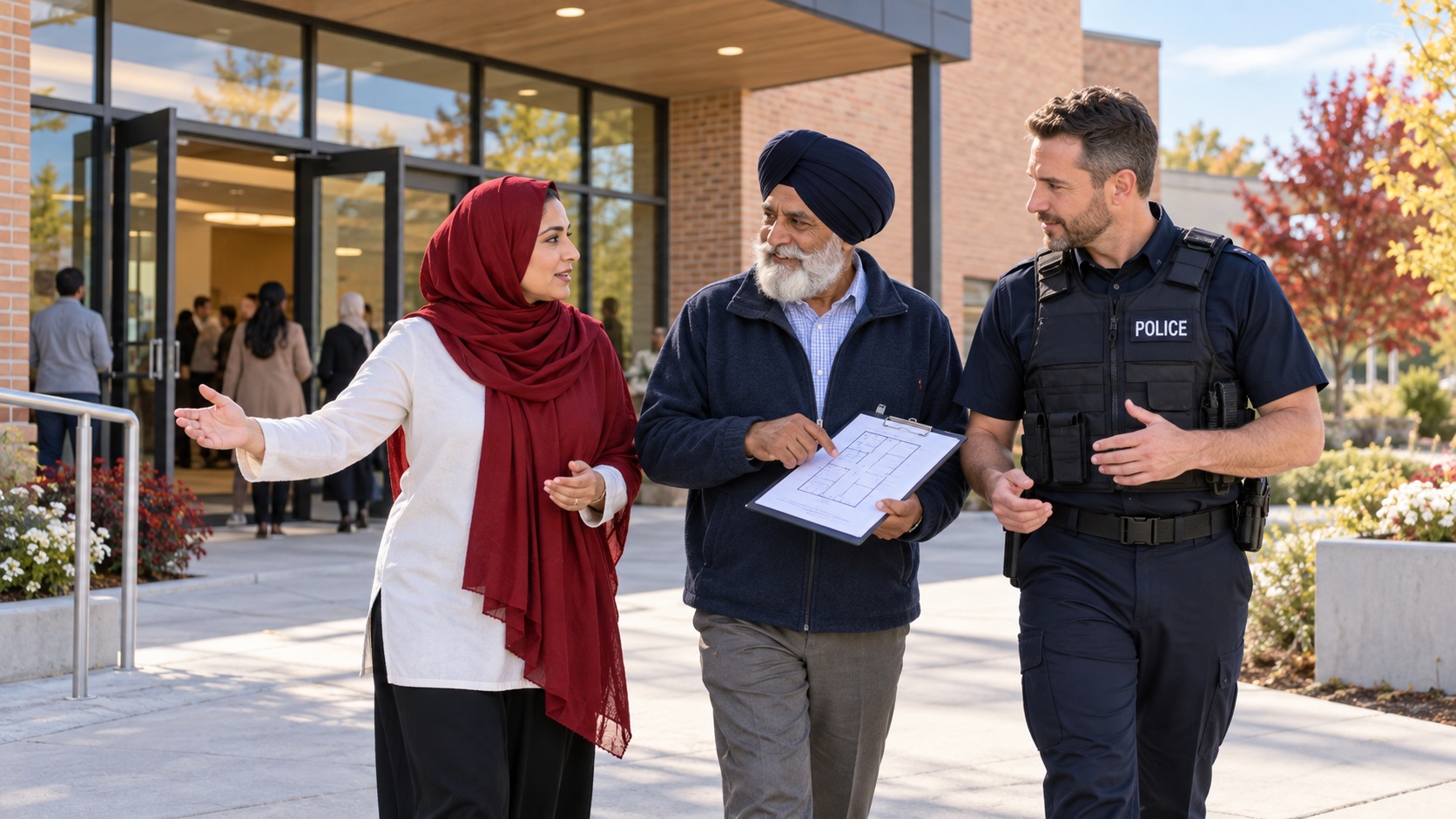
A faith community is preparing for a busy festival.
Share the expected activities, access needs and questions from volunteers and congregation members.
Explain the liaison role, appropriate contact routes and what can be considered in a joint planning meeting.
Identify the community lead, confirm responsibilities with each participant and set a time to review the arrangements.
CSRC welcomes people from every faith community, including those whose traditions or smaller congregations are often absent from public conversations about safety.
You can register as an individual, a faith leader, a community volunteer, a law enforcement professional or someone working in a local organization. You do not need to speak on behalf of an institution to express an interest.
There is one signup form for everyone. Tell us where you are, what you would like to contribute and what your community needs. We will review your registration before discussing participation.
Questions about trust, discrimination and the experience of reporting should be heard alongside practical questions about venues and events.
Use now · open templates
Use this worksheet to prepare a meeting between a faith community and its local police liaison. Agree a concern, a responsible person and a follow-up date. Download or print your notes to bring to the conversation.
Use general descriptions. These worksheet entries stay in this browser tab unless you download or print them.
One issue, one first action, one review.
“Whose account is missing, and what should remain with a qualified service rather than this table?”
For each need, record the right service, eligibility, geography, safe contact route, and last verification date. Confirm availability directly before giving a referral.
Do not enter incident narratives or personal case details here. These fields stay in this browser and are not submitted.
After you sign up
Share your contact details, location and interest. Choose whether you want email or WhatsApp updates.
Yusuf Siraj reviews your registration and follows up about your interests and the next step.
Discuss local needs, who else should be involved and what you can contribute. A formal role or council requires a separate agreement.
Email and WhatsApp will support communication while BeeGood is being prepared. You can opt in to a future invitation; your details will not be transferred automatically.
Your questions
No. The programme is being developed for cooperation across all faith communities and law enforcement. The same signup form is open to everyone interested in contributing.
The local council model and participation arrangements are being developed. Registration lets us review your interest and discuss the next step; it does not confirm that a council exists in your area.
This website collects registrations only. Contact the appropriate local emergency service, police reporting channel or support service for an incident. Do not include private incident details in the signup form or worksheet.
No. Participation does not confer police authority, an institutional partnership or access to protected records. Each organization retains its responsibilities and information safeguards.
After submitting, save your private registration link or download your receipt. The link lets you check your review status or withdraw your registration.
One signup for everyone
Bring the experience of your congregation, neighbourhood or professional work. Sign up here to begin an onboarding review.
Tell us a little about yourself. Yusuf Siraj reviews registrations and will contact you about the next step. Choose email or WhatsApp updates below. BeeGood invitations will follow when the platform is ready, if you opt in.